Call Us: +86-579-87952637Email: sale03@huaruitools.cn
enLanguage

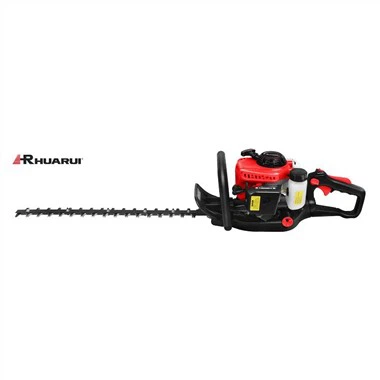
Hedge Trimmer


Why Choose Us

Our Company

Zhejiang Huarui Tools Co., Ltd was established in 2005 and is located in Wuyi. The company covers more than 15,000 square meters, with construction exceeding 20,000 square meters, and employs over a hundred people.

Our Products

Huarui Tools specializes in designing, manufacturing, and marketing garden tools, especially gasoline chainsaws, brush cutters, ground drills, and hedge trimmers. Our products are mainly used for cutting wood, pruning yards, trimming grass, digging holes, and more.

Production Equipment

We utilize CNC machines, semi-automatic assembly lines, a soundproof adjustment room, and CMM.


Production Market

Our products are sold in India, Romania, Turkey, Poland, Russia, Brazil, and Italy.


What Is Hedge Trimmer?


Hedge trimmers are multi-purpose instruments that may be used for more than just shaping hedges. They’re also useful for getting rid of overgrown grass, weeds, shrubs, and bushes. Consider the following examples of what hedge trimmers can cut.


Hedge trimmers are basic gardening equipment for cutting, trimming, or pruning plants in the garden and yard. There are many various types and styles of hedge trimmers, which means that purchasers have a lot of options while buying. Hedge trimmers have traditionally been powered by gas, but more and more are now powered by electricity. Using a gas powered hedge trimmer makes it much simpler to maintain the hedges around the house and yard clean and neat, and it also guarantees that the task is accomplished quickly.


Benefits of Hedge Trimmer
 

Efficient Trimming
Hedge trimmers are specifically designed for trimming hedges and shrubs, making the task much faster and more efficient compared to using manual tools like shears. They have sharp blades that can cut through branches and foliage with ease, allowing for precise and clean cuts.


Time-Saving
Hedge trimmers significantly reduce the time and effort required for trimming tasks. They enable you to cover larger areas and complete the job in less time compared to manual trimming methods. This is especially beneficial for those with extensive or multiple hedges to maintain.


Versatility
Hedge trimmers come in various types and models, offering different features and capabilities. This allows you to choose a trimmer that suits your specific needs, whether it's for trimming small hedges in a residential garden or tackling larger, more demanding landscaping projects.


Safety Features
Modern hedge trimmers often come with safety features such as blade guards and safety switches. These features help prevent accidental injuries and provide added protection while operating the trimmer. However, it's still important to follow safety guidelines and wear appropriate protective gear when using hedge trimmers.


Adaptability to Different Hedges
Hedge trimmers are suitable for trimming various types of hedges and shrubs, including different species and sizes. They can handle both thin and thick branches, allowing you to maintain different types of foliage and achieve desired shapes and sizes for your hedges.


Type of Hedge Trimmer


Battery-Powered Hedge Trimmers
Features: Battery-powered hedge trimmers are cordless and operate on rechargeable batteries. They offer greater mobility and freedom of movement as they are not tethered to a power source. Battery-powered trimmers are suitable for small to medium-sized hedges and are convenient for properties without easy access to power outlets. They provide decent cutting power and are quieter than gas-powered trimmers. However, the runtime of battery-powered trimmers is limited by the battery life.


Gas-Powered Hedge Trimmers
Features: Gas-powered hedge trimmers are the most powerful and suitable for heavy-duty trimming tasks. They are typically heavier and louder than electric or battery-powered models. Gas trimmers offer excellent cutting performance and can handle large hedges and thick branches. They are ideal for professional landscapers and individuals with extensive trimming needs. However, gas-powered trimmers require fuel (gasoline) for operation and regular maintenance, including fuel mixing and engine maintenance.


Pole Hedge Trimmers
Features: Pole hedge trimmers are designed with an extended shaft or pole that allows users to reach tall hedges or trim the tops of hedges without using a ladder. They are available in electric, battery-powered, and gas-powered versions. Pole trimmers are versatile and can be adjusted to different angles for trimming at various heights and angles. They are suitable for trimming tall hedges or hard-to-reach areas.


Multi-Tool Hedge Trimmers
Features: Multi-tool hedge trimmers are part of a versatile tool system that allows users to switch between different gardening tools using a single power source. These systems typically include attachments for hedge trimming, pruning, grass trimming, and other gardening tasks. Multi-tool hedge trimmers are convenient for users who require multiple tools for their gardening needs.


Application of Hedge Trimmer
长杆篱笆修剪机
手动树篱修剪机
二冲程树篱修剪机
重型篱笆剪

When to Trim Your HedgesIf your hedges are just-planted or still semi-mature, they will require some degree of formative pruning during the winter and early spring, in order to ensure they reach their full potential. Once a hedge is more established, it will need to be trimmed in order to maintain its look and overall health. Informal hedges can be trimmed once a year, whereas formal hedges should be trimmed twice or sometimes even three times between the spring and summer.


Hedge Trimming Techniques
How you go about trimming your hedge will depend on its species and age, but we can group the various techniques into three distinct stages.


Formative Pruning
Once a hedge is planted it will need to be pruned in order to shape its growth and ensure its longevity. Spring is the best time to prune young evergreens, whereas deciduous breeds prefer wintertime pruning.
After planting, cut away leading and side shoots by about a third. Monitor growth and repeat this process the following winter, and until they are more established in the space.


Informal Pruning
Informal hedges are wild in their shape and suit gardens that welcome wildlife or those looking to soften the edges of their landscaping. Think of species such as lavender, hawthorn, and field maple – all of which are popular informal hedges in the UK. Trimming informal hedges is similar to that of a standard shrub. Your focus will be to cut back stragglers and get the hedge to the required size, but neatness and uniformity are not the goals. The best tools for informal pruning are loppers or secateurs, which will help you to choose more precisely the branches or tendrils you want to remove, to maintain a natural appearance.


Formal Pruning
Formal hedges have a uniform and tailored shape that would not occur naturally in the wild. This trimming technique is ideal for landscape or walkway bordering and for spatial divides between adjoining gardens. Topiaries would be classed as a formal type of hedge, but other more casual species include box, hornbeam, beech, and yew. Most species can be cut formally, but only certain variants take well to this heavy-duty pruning technique, namely conifers.


Process of Step-by-Step Guide on How to Maintain Hedge Trimmer Blades
 

Gather the Necessary Tools and Equipment
Before you begin the maintenance, you will need the necessary tools and equipment that includes sharpening files, cleaning materials, and lubricants. The cleaning materials will help in removing debris and sap, the files will help you sharpen the blades, and the lubricant will help reduce friction and prevent rust.


Safety Always Comes First
Before you start the maintenance process, make sure that the tool is not connected to the power source. Just unplug it from the source so that there is no risk of accidental starting.


Cleaning the Blades
The very first process involved in the maintenance of your hedge trimmer blades is cleaning. For the cleaning process, you will need the proper cleaning equipment.
First of all, use clean clothes to wipe the first, dust, oil, and grease away on the blades.
Then, use the soft brush to further clean the debris from the cutting blades as well as the air intake.
Once you have removed the debris that was stuck on the blades, you can use the resin solvent to clean it further.


Sharpening the Blades
Dull blades are usually responsible for the performance drop in the hedge trimmer. They lead to inefficient cutting and cause strain on the motor.
If you are using a grinder in place of a file, you will have to use a low-speed one and have to water the edges of the blades continuously during the operation.
It is better to clamp the blade assembly on a workbench for more efficient results. File the exposed cutting surface of each blade tooth. You must maintain the original angle while filing or grinding.


Lubricating the Hedge Trimmer Blades
Now that you have cleaned and sharpened the hedge trimmer blades, the last step is lubricating them.
To do that, you simply have to apply the oil on the edges of the blades. Simply, place the trimmer on a flat surface and apply the oil. That’s all.


Thorough Inspection for Signs of Wear or Damage
During the maintenance, check the blades thoroughly for any sign of wear or damage. If you notice any nicks, cracks, or any other issues on the blades, you must take care of them immediately.


How To Maintain Your Hedge Trimmer


If you want your tools to last, you need to maintain them. That means regular care, cleaning, servicing and proper storage. And when it comes to your hedge trimmer, it’s no different. Components like the blades, motor, air filter and handle grips all need regular attention.


Clean the cutting bladesEvery time your hedge trimmer cuts its way through leaves and small branches, trace amounts of sap begins to accumulate on the blades. Over time, this can cause the blades to bind up, reducing the efficiency of the cut. Not only do dirty blades reduce cutting performance, but the added friction can cause the motor to begin to overheat.


Clean the air filter
For your petrol hedge trimmer motor to function properly it needs a constant flow of clean, cool air. When you use your hedge trimmer, debris and dust particles begin to build up in the filter and reduce the airflow, which results in a lack of engine power, poor performance and overheating.


Sharpen the hedge trimmer blades
Like any cutting tool, every time your blades get to work on the foliage, they gradually over time become blunt. Sharp blades equal sharp cutting, which is exactly what you want from your hedge trimmer.


Tighten any loose screws or fittings
Loose parts can easily fall off, become lost, or cause damage to the rest of the tool. This can be especially daunting if you are not quite sure what fell off and if it will make it dangerous to continue trimming your hedges. The vibrations that a hedge trimmer produces can cause screws, bolts, and connectors to loosen over time. These are good examples why all tools need regular servicing.


Lubricate the blades regularly
The more you use your hedge trimmer, the more exposure to moisture and contaminants the blades receive. It is surprising just how quickly erosion can set in and a good lubrication every month will help provide a protective barrier. The lubrication also helps the blades glide over each other smoothly, resulting in less friction and more cutting power.


Keep the exterior clean
Buttons, springs, switches, screws and adjusters can all fall victim to poor maintenance if your hedge trimmer isn’t kept clean. Not to mention, a poorly kept trimmer can run hot as cool air won’t be able to flow freely over the motor.


Store it correctly
If you store your garden tools in a shed or tool box on your vehicle that is excessively damp or prone to leaks, you’re almost guaranteeing to shorten its lifespan. Moisture will cause metal parts to corrode. The fuel system may become contaminated. And if your hedge trimmer is battery driven, it may result is electrical shorts and electrical component failures.


How to Sharpen Hedge Trimmers With a Grinder?


A power grinder offers the fastest way to fine-tune a shrub trimmer. However, using it requires proper handling as it is a heavy-duty tool designed to provide acute results. If you are not careful, you won’t only take off too much material from the teeth but can also end up damaging the blade.


Clamp the Blades Into Position
Clamp the blades into a vise, moving them into a better position for grinding. I advise picking a 60 to 80-grit disc for the grinder, as it would provide a better finish on a metal surface than a 40-grit.


Locate the Right Angle
Find the correct angle and move the grinder along the blade’s teeth. Apply a slight pressure and maintain the angle. Do that for 2 to 3 seconds as the grinder works quickly, and you can accidentally shave off lots of material from the blade.


Use Shorter Strokes
First, start at the top surface of the teeth and then move downwards. Keep your hand steady and use shorter strokes when running the tool to avoid disproportionate surfaces. Repeat the process for all teeth until they all look polished.


Clean the Blades
Wipe the blades with a wet rag and apply a coating of 3-in-1 oil to prevent grime and rust accumulation.


FAQ


Q: What is a hedge trimmer used for?

A: A hedge trimmer is a gardening tool used to prune hedges and bushes. Trimmers can be manual or powered. Manual trimmers, also called hedge clippers, are large shears with long handles for reaching over the tops of bushes. Manual trimmers are low-cost but often labor-intensive.

Q: What is the difference between a hedge cutter and a hedge trimmer?

A: Hedge trimmers are powered by electricity, and due to their twin-action blades, they move in a back-and-forth motion, ideal for precision trimming on smaller branches. On the other hand, hedge cutters use a power source that provides more force necessary while dealing with larger branches.

Q: Will a hedge trimmer Cut branches?

A: Most blades can cut branches up to 3/4 inches, but larger capacity trimmers are available. Blades are made either from steel (stainless or carbon) or aluminum. A hand guard protects you as you cut. Weight and balance are important since you'll be holding the machine at chest height or higher.

Q: What is the difference between shears and hedge trimmers?

A: Even though they are both employed for cutting and trimming hedges, their functions differ depending on their design. Shears are shaped like larger scissors, whereas trimmers are longer and have varied lengths, similar to a typical school scale.

Q: Can I use a chainsaw as a hedge trimmer?

A: If you're dealing with an overgrown hedge – perhaps once you've inherited upon moving homes – you can most likely restore it to health, but it will take some time and patience. You'll want to trim the hedge right back and cut down a significant portion of its height using a chainsaw.

Q: Can I use hedge trimmer to cut bushes?

A: Despite the popularity of hedge trimmers (also called power shears or motor shears), they're not always the best tool for pruning your shrubs since it's hard to control what or how you're cutting. Hand pruning your shrubs will not only save you time and money, but it will help keep your plants healthy.

Q: What do you cut with a hedge trimmer?

A: Hedge trimmers can make short work of shearing hedges or individual shrubs. They will not cut heavy branches, but cleanly cut small branches up to about 1/4 inch in diameter. They are easy to use. The type of trimmer you need will depend on how much you have to trim and how accessible the area is.

Q: Is a hedge trimmer the same as a bush trimmer?

A: A hedge trimmer, shrub trimmer, or bush trimmer is a gardening tool or machine used for trimming (cutting, pruning) hedges or solitary shrubs (bushes). Different designs as well as manual and powered versions of hedge trimmers exist.

Q: Do I need a cordless hedge trimmer?

A: Are petrol or battery hedge trimmers better? Cordless, battery powered hedge trimmers are the better choice for most domestic gardens. They're lightweight, economical, much easier to start up and quieter. If you have further questions about hedge trimmers (or hedge cutters), our friendly expert team can help.

Q: Are hedge trimmers easy to use?

A: Electric trimmers are cheap and easy to use but are constrained by their length of cord. Cordless models give greater freedom but only last as long as the battery charge. Petrol hedge trimmers are the most powerful, but are noisy and need regular maintenance.

Q: How thick of a branch can hedge trimmers cut?

A: Hedge trimmers are specially designed for the super thin, lightweight twigs and leaves of a hedge or bush. Their grooves are about ¾ of an inch to half an inch wide at most, and when you compare that to the size of your tree's branches, it's just not the right fit.

Q: Which is better single blade or double blade hedge trimmer?

A: Blade hedge trimmers are great for shaping hedges. They allow you to quickly move back and forth across a hedge without needing to reposition yourself with every cut. Double-sided units offer more versatility and complete the job in less time than single-sided units.

Q: What is an alternative to a hedge trimmer?

A: Many professional gardeners don't like electric or gas-powered hedge trimmers because they can chew up leaves and leave behind mangled edges and browned tips. Hand shears give you a better feel for how a shrub grows and where to cut.

Q: Is it necessary to have a hedge trimmer?

A: In some cases, hand shears will suffice for maintaining your hedge and are a simple way to trim. However, if you have a particularly large hedge, several hedges, mobility issues, or need the hedge cut quickly, powered hedge trimmers make the job much easier and speedier.

Q: Are cordless hedge trimmers better than electric?

A: Thanks to the powerful lithium-ion battery, cordless hedge trimmers are also suitable for demanding cutting work and hedges with thicker branches. However, very thick branches or resistant hedges are best cut with petrol hedge trimmers or electric hedge trimmers, even if you're not a professional.

Q: Do I need a chainsaw or a hedge trimmer?

A: A hedge trimmer is designed for trimming and shaping hedges, shrubs, and other plants with woody stem up to about 5/8 of an inch thick. A chainsaw, on the other hand, is much more powerful and can cut through much thicker material, making it better suited for felling trees or cutting firewood.

Q: Which is better, a gas or an electric hedge trimmer?

A: Hands down, gas powered hedge trimmers are more powerful, making them better for larger jobs. You also don't have to worry about having extra batteries while you are on a bigger hedge trimming project. Simply keep gas and oil on hand and you can trim for hours and hours on end.

Q: Do I need a pole saw or hedge trimmer?

A: Hedge trimmers are made especially for the thin twigs or leaves on a bush. Even though their blades are sharp, hedge trimmers are not usually powerful enough to cut through thick branches. If you primarily have large trees in your yard, a pole saw will likely be better suited for your needs.

Q: What is the difference between a hedge trimmer and a hedge cutter?

A: A hedge cutter, also known as a hedge shear, is a handheld device with long blades designed to cut through thicker branches. In contrast, a hedge trimmer is an electronic device with dual-action blades, which can rapidly trim small branches.

Q: Can I cut a hedge with a chainsaw?

A: If you're dealing with an overgrown hedge – perhaps once you've inherited upon moving homes – you can most likely restore it to health, but it will take some time and patience. You'll want to trim the hedge right back and cut down a significant portion of its height using a chainsaw.

We're professional hedge trimmer manufacturers and suppliers in China, featured by quality products and low price. We warmly welcome you to buy hedge trimmer for sale here from our factory. Contact us for customized service.

Wood Cutting Machine Petrol, 4 stroke Brush Cutter

(0/10)

clearall